
How modern Patient Education with video solutions noticeably relieves the daily routine in hospitals
Digitization has changed many areas of medicine, but one central component of the treatment routine has remained surprisingly analog to this day: Patient Education. While imaging procedures, surgical processes and administrative systems are increasingly being digitized, pre-procedure information is still often provided using paper forms, handwritten notes and physical signatures.
This media disruption is not only a burden for doctors, but also makes it difficult for patients to access understandable information. Digital and, in particular, audiovisual information solutions offer clinics the opportunity to make the process more efficient, safer and more patient-centered.
Analog education reaches its limits in modern hospital operations
Patient Education has grown historically in many hospitals. Paper-based forms are available for almost all procedures, cover a wide range of languages and contain both medical information and anamnesis sections. Nevertheless, this is precisely where a considerable amount of work is required:
- The forms must be completed by hand.
- Doctors add individual instructions in writing.
- All documents must be scanned or filed.
- Patients often leave the conversation with incompletely understood content.
At the same time, the pressure to document is increasing. The legal requirements demand comprehensible, individualized information that clearly safeguards the patient’s right to self-determination. This includes personal instructions, comprehensible explanations and clear documentation that the patient has understood the risks and alternatives.
However, reality shows that many patients quickly forget the content of the conversation, and uncertainties often remain – a risk for the legal certainty of the doctor and for the success of the treatment.
Digital systems solve media disruptions – but only if they are done well
Numerous digital information and medical history solutions have been developed in recent years. Some providers digitize existing paper forms, offer electronic signatures or allow forms to be filled out at home. However, these solutions often stop halfway:
- Education continues to take place mainly via text.
- Individualization takes place via handwritten additions – digital or analog.
- The experience for patients is hardly more understandable than before.
- The process remains time-consuming.
Other systems combine the sheets with explanatory videos. However, these are often static and not tailored to the individual case. This is precisely where the main bottleneck arises: without genuine personalization, the workload for medical staff remains virtually unchanged.
Why true individualization is the game changer
Modern, patient-centered information must present medical content in an understandable, clear and individual way. Video-based solutions with a modular structure enable doctors to create a personalized educational video in no time at all.
The advantage of such an approach lies in several dimensions:
- Better comprehensibility:
Visual content makes it much easier to understand complex information. Patients can watch the video several times and understand the content at their leisure. - True individualization:
Suitable information modules can be combined for every indication and every procedure. The finished video accurately reflects the procedure, the risks and the patient’s situation. - Saves time during the consultation:
As key information has already been communicated in advance, the doctor-patient consultation can focus more on individual questions and decisions. Clinics report considerable time savings. - Legal certainty:
The traceability of the individualization, the time of access and the documentation of the process increase legal certainty throughout the entire clarification process. - Improved treatment compliance:
Well-informed patients follow post-operative instructions better, which leads to better treatment results in the long term.
Everyday hospital life benefits – medically, organizationally and economically
Digital, video-based educational processes bring added value beyond the mere provision of information. They relieve the burden on clinics precisely where the pressure is particularly high:
- Less duplication of effort due to parallel analog and digital systems
- Clearly structured, fully documented clarification processes
- Faster processes and higher patient throughput
- Fewer misunderstandings and queries
- More time for core medical tasks
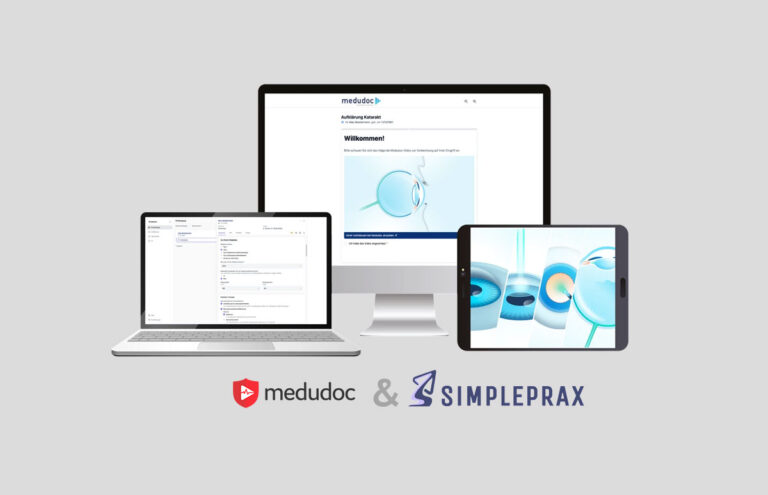
While many current solutions are still based on paper, modern platforms show what a fully digital, video-based approach can look like: modular, individual, legally compliant and, above all, user-centered.
Conclusion: Digital Patient Education is not a technical project – it is a quality feature
Modern Patient Education means providing patients with better information, relieving the burden on doctors and at the same time reliably mapping legal requirements. With a well thought-out digital approach that combines audiovisual content, individualization and intuitive usability, clinics create real added value for everyone involved.
Modern Patient Education not only strengthens communication, but also demonstrably improves the quality of care. This is precisely why it is a central element of any sustainable digital strategy in the healthcare sector.