Rethinking digital pre-anaesthesia: Why DMEA 2026 will be a turning point for pre-operative workflows
The structural weaknesses of preoperative processes have been known for years – and yet they persist. Fragmented processes, incomplete information at the time of pre-anaesthesia, high manual effort and legal uncertainties continue to characterize everyday life in many facilities. Especially in an area that is so sensitive in terms of medicine, organization and liability law, this discrepancy is having an increasingly systemic effect.
Against this backdrop, the year 2026 does not mark a further step in digitalization – but a possible turning point: the question is no longer whether preoperative processes will be digitalized, but how consistently and structurally this transformation will be implemented.
With the presentation of a new platform generation at the DMEA 2026 in Berlin, the focus will be on precisely this question: how can a preoperative workflow be designed in such a way that it is not only digital, but actually consistently controllable, resilient and scalable?
The real problem is not the technology
Many digitization initiatives in the preoperative context do not fail due to a lack of tools. Digital medical history forms, individual educational videos and electronic signatures have long been available. Nevertheless, the hoped-for relief often fails to materialize.
The reason is structural: existing processes are mapped digitally, but not rethought.
The pre-anaesthesia outpatient clinic continues to act as a central collection point for all information – with the familiar result: incomplete documentation, redundant conversations and high time pressure. In this context, digitization becomes an additional layer, not a solution.
The central question is therefore: How can the entire preoperative process be shifted to the outpatient clinic and prepared there in a structured manner?
Preoperative workflows as an integrated system
A resilient preoperative process is not created by optimizing individual steps, but by integrating them into a consistent logic.
This is precisely where the new platform generation, which will be presented for the first time at DMEA 2026, comes in: It understands the preoperative workflow not as a sequence of isolated measures, but as a coherent system – from initial data collection to legally compliant consent.
The focus is on the consistent synchronization of three levels:
- The medical level: complete, structured anamnesis and findings data before the first medical contact.
- The cognitive level: an actual understanding of the patient through individualized, video-assisted education.
- The legal level: traceable, audit-proof documentation of the entire information and consent process.
Only when these levels are interlinked can a process be created that is not only efficient, but also qualitatively and legally robust.
Four modules – one end-to-end workflow
The solution presented at the DMEA operationalizes this approach in four interlinked modules:
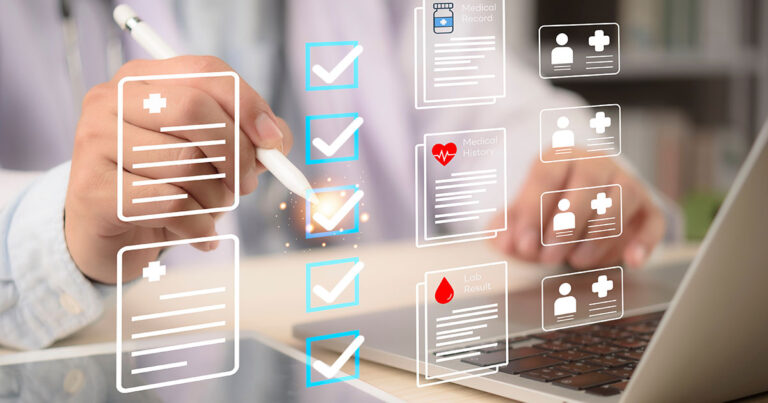
Digital anamnesis shifts data collection to the patient’s home context. Structured entries and integrated completeness checks create a reliable information base at an early stage.
The report entry ensures that all relevant documents are available in advance, checked and centrally available. Media discontinuities are eliminated and subsequent claims are reduced.
Video-assisted Patient Education goes beyond traditional information sheets. Modular, individualized video sequences not only convey content, but also contextualize it – adapted to the procedure, risk profile and patient situation.
Electronic informed consent completes the process seamlessly and ensures that consent is documented in a legally secure manner and can be traced at any time.
The decisive innovation here is not in the individual components, but in their integration: all modules follow a common process logic and interlock without any breaks.
Individualization as the key to process quality
Patient Education is a particularly critical point in the preoperative phase. In many facilities, it is still based on standardized content that is communicated regardless of the individual risk constellation or type of procedure.
This approach is not only inefficient, but also structurally problematic. The solution presented at the DMEA takes a different approach: information is understood as a customizable, modular process. Video content is compiled dynamically – tailored to the specific procedure and the patient’s initial medical situation.
This has two main effects:
- On the one hand, patient understanding is improved because the content is more relevant and contextualized.
- Secondly, the quality of the medical consultation changes. Instead of repeating basic information, the focus can be placed on individual risks, questions and decision-making aspects.
This shift is not only relevant in terms of communication, but also legally: individualized, documented information increases the traceability and robustness of the entire process.
From the ambulance as a bottleneck to a controllable unit
The classic pre-anaesthesia outpatient clinic is a bottleneck in many hospitals today – characterized by waiting times, high frequency and limited planning.
An end-to-end digitalized workflow is fundamentally changing this role.
If the medical history, findings and information are available in full before the appointment, the outpatient clinic is transformed from a reactive collection point into a controllable unit. Appointments can be allocated in a more targeted manner, and a significant proportion of patients – especially low-risk patients – can receive full telemedical care.
The consequence is a double relief:
- Fewer patients on site reduce operational pressure.
- At the same time, there is more time for complex cases that actually require a personal introduction.
This transformation is not a theoretical concept, but will be demonstrated for the first time at DMEA 2026 as an integrated, tangible solution.
Process stability as an economic factor
In addition to medical quality and organizational efficiency, the economic dimension also plays a central role.
Unstable preoperative processes regularly lead to postponements of operations, inefficient use of resources and unnecessary multiple contacts. These effects are rarely visible in isolation, but add up to a considerable economic risk.
A structured, digitally controlled workflow reduces these uncertainties. Processes become more predictable, failures are less frequent and capacities can be better utilized.
The economic relevance does not result from individual savings, but from the stabilization of the overall system.
DMEA 2026: From concept to tangible reality
Many of the approaches described are understandable in theory. However, the real challenge lies in their practical implementation in everyday clinical practice.
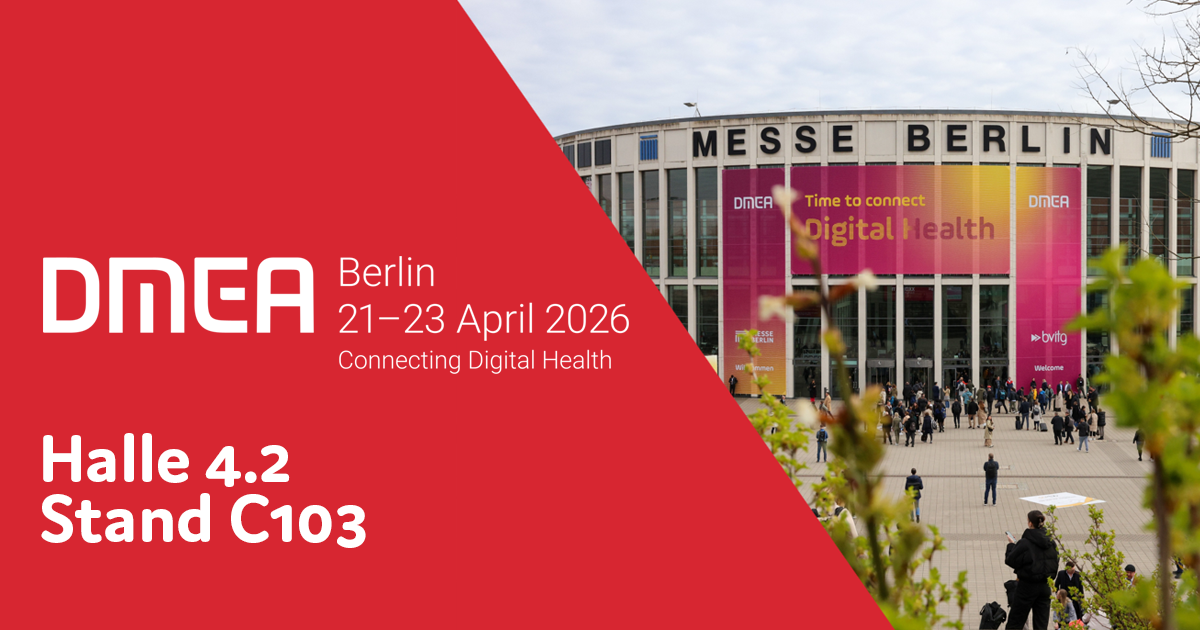
From 21 to 23 April in Berlin, the new medudoc platform generation will be presented for the first time, which consistently maps the preoperative workflow end-to-end – from digital anamnesis and recording of findings to individualized information and legally compliant consent.
The focus is not on the technology itself, but on the question of how digitalization actually feels in everyday life in the pre-anaesthesia outpatient clinic: as a relief, as a structural gain and as a basis for better medical decisions.
Conclusion: Why now is the right time
The structural problems of preoperative processes have been known for years – but their effects are becoming increasingly clear as the system load increases.
At the same time, the technological requirements have now been developed to such an extent that genuine end-to-end integration is possible for the first time.
The presentation of new platform approaches at DMEA 2026 therefore marks more than just a product innovation. It exemplifies a paradigm shift: away from isolated digitalization measures and towards an end-to-end, patient-centric and controllable preoperative workflow.
For decision-makers in the healthcare sector, the question is therefore not so much whether this development is relevant – but how quickly and consistently it can be translated into their own organization.