
Rethinking the digitalization of Patient Education in modern clinical practice
The reality of everyday hospital life speaks for itself. While almost all areas of life are fully digitalized, a visit to hospital feels like a technological journey into the past. Patient Education, including Informed Consent and information sheets, is particularly affected by this. Analogue processes dominate, even though digitalization has long had the potential to significantly reduce the burden on doctors and measurably improve the patient experience.
The administrative overhead eats up capacity. According to the Marburger Bund, the daily time spent on documentation, data recording and organizational activities has been increasing dramatically for years. In 2013, only 8 percent of hospital doctors stated that they spent at least four hours a day on administration; today the figure is 35 percent. Two to three hours of administration time per day has also become the norm for many. These figures are a massive alarm signal and show the missed opportunity of digital solutions that offer real efficiency levers.
Despite existing hospital software, the user experience remains negative. Many systems are technologically functional but not developed with the user in mind. A lack of UX principles means that digital tools consume more time than they save. This is a clear indication that digitalization in the healthcare sector is too often technology-driven rather than human-centric. This is precisely where the biggest gap in Patient Education arises.
Why user-centric digitalization must transform Patient Education
For a long time, user experience was not a priority topic in the healthcare tech environment. Roni Zeiger, former Chief Health Strategist at Meta, brings the key point to the table: IT systems for experts were often developed without a focus on usability. Medicine was traditionally a field-centered ecosystem in which user orientation was considered to be of secondary importance. The consequence is evident today. Complex interfaces, increasing cognitive load, lack of integration and barely usable digital information processes.
However, when doctors have less and less time, the relevance of digital Patient Education increases significantly. Informed consent must be documented in a legally secure manner, communicated individually and prepared in a way that patients can understand. At the same time, jurisprudence and clinical standards are increasingly demanding personalized information.
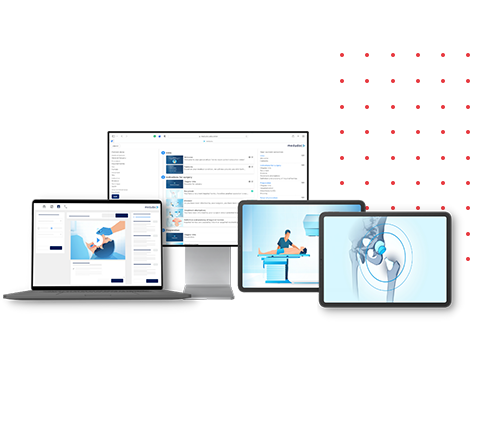
Digital solutions can meet these requirements if they are developed in a stringently user-centered way. This is exactly where modern patient education software such as medudoc comes in. Digitalized information sheets, interactive content and personalized patient education videos enable a significantly improved understanding of information and reduce the need for repeat consultations. Doctors can focus on the medically relevant content instead of managing processes.
The four key success factors for user-centric digitalization in everyday clinical practice
1. understand real use. Shadowing in hospitals
Successful digital Patient Education does not start in the office but on the ward. Only those who observe the day-to-day work of doctors first-hand can recognize real pain points, inefficient workflows and gaps in the documentation of informed consent. Shadowing provides this unadulterated picture and enables data-based prioritization.
2. validate relevance. Thoroughly examine the needs of doctors and patients
Only when it is clear which challenges really exist do hypotheses need to be validated through interviews and market research. This is the only way to determine whether the existing process is accepted or whether there is actually potential for optimization. If there is no market standard, it is time to start prototypical digitalization of Patient Education.
3. ensure co-creation. Doctors and patients as development partners
Digital education solutions can only perform if they are developed together with the clinical environment. Co-creation prevents undesirable developments and creates products that are precisely tailored to user requirements. For the modern information sheet, this means Doctors help decide which content is relevant, how interactions are designed and which documentation requirements must be met.
4. rapid testing. Test prototypes early instead of perfecting them in a quiet room
Healthcare products that are developed without iterative testing regularly fail. Design sprints with real users ensure that digital Patient Education is immediately adapted to actual requirements in terms of user guidance, click paths and comprehensibility. Rapid feedback is the key to functional innovation.
Digital Patient Education as a strategic lever for modern clinics
Clinics are under massive pressure to become more efficient. The shortage of specialist staff will become even more acute by 2025 and analog clarification processes are a drain on resources. Digitization not only offers optimization potential here, but also a strategic differentiator. A digitalized information sheet enables scalable process quality and demonstrable relief for medical teams. Individualized videos increase patient understanding and significantly reduce inquiries. Legal certainty increases because content is documented in a standardized, comprehensible and audit-proof manner.
Digital Patient Education is therefore much more than a software feature. It is a transformation tool that supports both clinical efficiency and patient safety. Hospitals that make targeted investments in user-centric digitalization increase their attractiveness as an employer, improve treatment quality and reduce risks in legally sensitive Patient Education.