


The first case sets the pace for the entire day’s schedule. Morning delays carry over into turnover times, overtime and cancelled procedures. Yin et al. examined how much the timing of consent contributes to this. The paper was published online on October 15, 2025 and in issue 36 (7–8) in 2026.
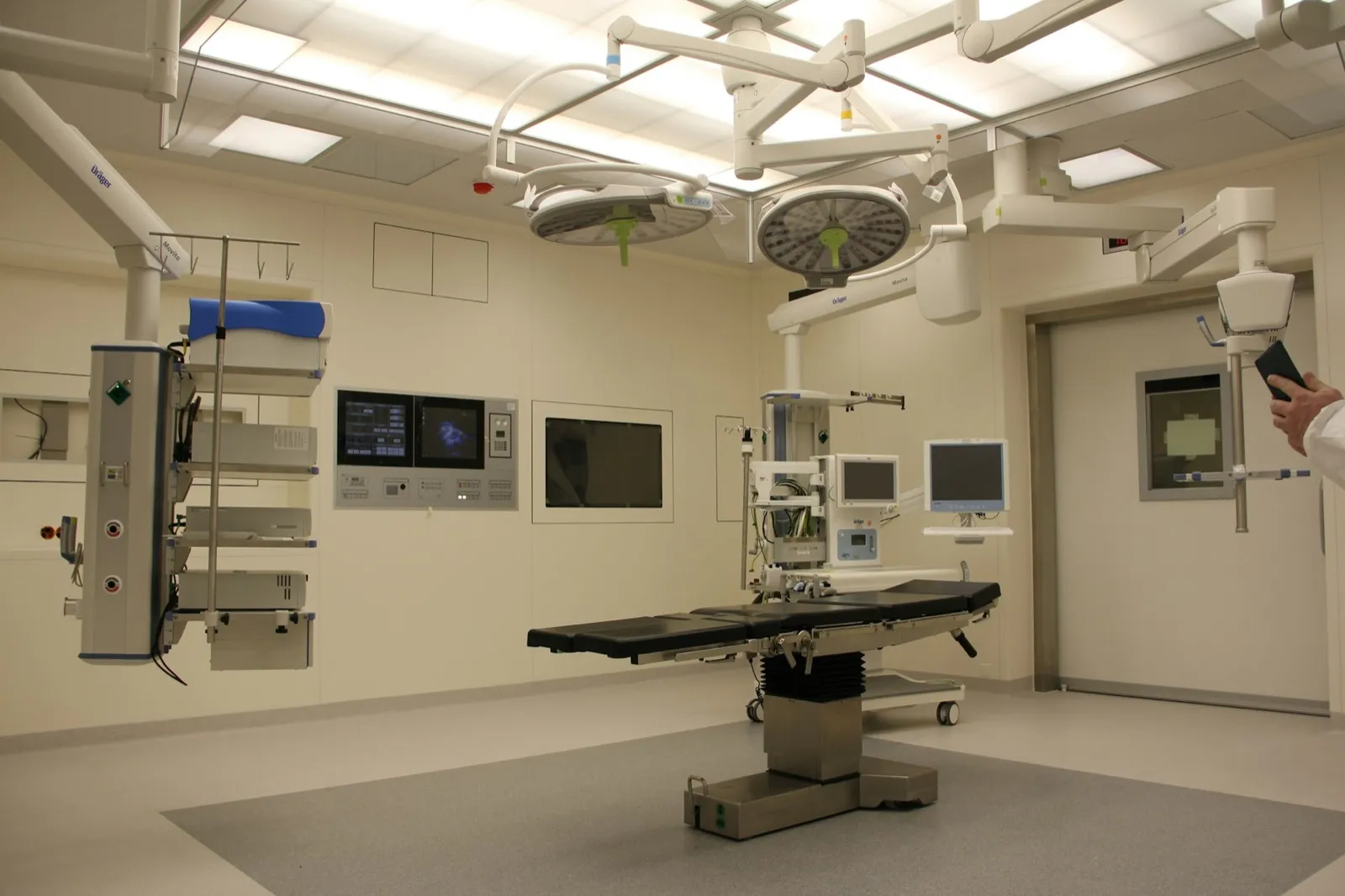
The operating room is ready, but the first case of the day cannot start yet. Photo: Marcel Scholte / Unsplash
How was the study on the timing of consent designed?
It is a single-centre observational study over 28 days starting in June 2021. It consecutively included all patients whose procedure was scheduled as the first case of the day.
- Setting and period: one centre, 28 days from June 2021
- Population: 289 patients admitted from home on the day of surgery
- Comparison: consent signed in the preoperative area on the day of surgery vs. consent signed before the day of surgery
- Other variables: including the patients’ first language
- Analysis: associations as odds ratios (OR) with 95 % confidence intervals
The study was conducted without any involvement of medudoc.
When did the first case count as delayed?
The first case counted as delayed if the patient entered the operating room more than five minutes after the scheduled time.
The threshold is deliberately tight. It reflects how little buffer the first case of the day has.
Results: day-of-surgery consent is significantly associated with delayed starts
Of 289 patients, 234 (81 %) only signed consent in the preoperative area on the day of surgery. This late signature was significantly associated with a delayed start (OR 3.2; p = 0.02).
| Factor | Odds ratio | 95 % CI | p-value |
|---|---|---|---|
| Consent on the day of surgery (vs. before that day) | 3.2 | 1.2–8.5 | 0.02 |
| First language other than English | 3.8 | 2.0–7.4 | < 0.0001 |
Signing late was therefore the rule, not the exception. The wide confidence interval is probably also due to the small comparison group: only 55 patients (19 %) did not sign in the preoperative area on the day of surgery.
What role does the patient’s first language play?
Patients whose first language was not English had 3.8-fold higher odds of a delayed start (p < 0.0001). First language was therefore a second significant factor.
The study does not identify the causes in detail. It is plausible that interpreting needs and follow-up questions put additional strain on the morning routine. In the DACH region, this applies to patients whose first language is not German. Comprehension questions clarified only in the preoperative area are clarified under time pressure.
Keeping your OR schedule on track: what does the finding mean for hospitals in the DACH region?
Consent belongs in the preparation phase, not on the morning of surgery. Section 630e of the German Civil Code (BGB) already requires this; the study adds an organisational and economic argument.
Under Section 630e (2) sentence 1 no. 2 BGB, patient education must take place early enough for patients to make a well-considered decision. A signature in the preoperative area is at odds with this. According to these data, it also costs OR time.
Four points matter for the assessment:
- Association, not causation: The study is observational, single-centre and covers 28 days. Organisational confounders cannot be ruled out.
- Leverage at the first case: Delays affect the entire day’s schedule. A tied-up specialist minute costs around €1.13 (Hierl et al., Die Unfallchirurgie 2026).
- Complete documents in advance: In the pre-anaesthesia clinic, missing documents were the most frequent disruption (Kieninger et al., Anaesthesist 2018; 2,233 premedication consultations).
- Process, not a single measure: What matters is that patient education, confirming understanding and signature are completed before the day of surgery.
With medudoc, consent is complete before the patient arrives on the day of surgery. medudoc is the comprehensive solution for preoperative patient management (PPM) and maps the path to the procedure on one platform. After the digital medical history, patients receive a personalised patient education video and a digital consent sheet tailored to them.
The consent discussion takes place on site or via telemedicine; the personal discussion remains the core element. The physician decides, depending on the procedure and risk profile, whether a telemedical consent discussion is sufficient. Consent is signed electronically, archived in an audit-proof way as PDF/A and handed over to the HIS via FHIR.
Comprehension questions can also be moved forward. medudoc provides patient education content in 27 languages. Legally binding consent is given on the German original; the translation helps patients whose first language is not German to understand it.
A prospective study at University Hospital Würzburg shows how much physician time prepared patient education frees up. With video, the median physician consultation time before cholecystectomy fell from 8.1 to 1.5 minutes (−81 %) and before colon resection from 11.9 to 3.3 minutes (−72 %; Leicht et al., World J Surg 2026).
The study’s conclusion: take consent out of the preoperative area
The authors conclude that signing on the day of surgery can considerably delay the first case. In addition to ethical reasons, they therefore recommend not obtaining consent only in the preoperative area.
Would you like consent to be complete before the day of surgery? Find out how the medudoc platform combines medical history, patient education and signature in one workflow.
